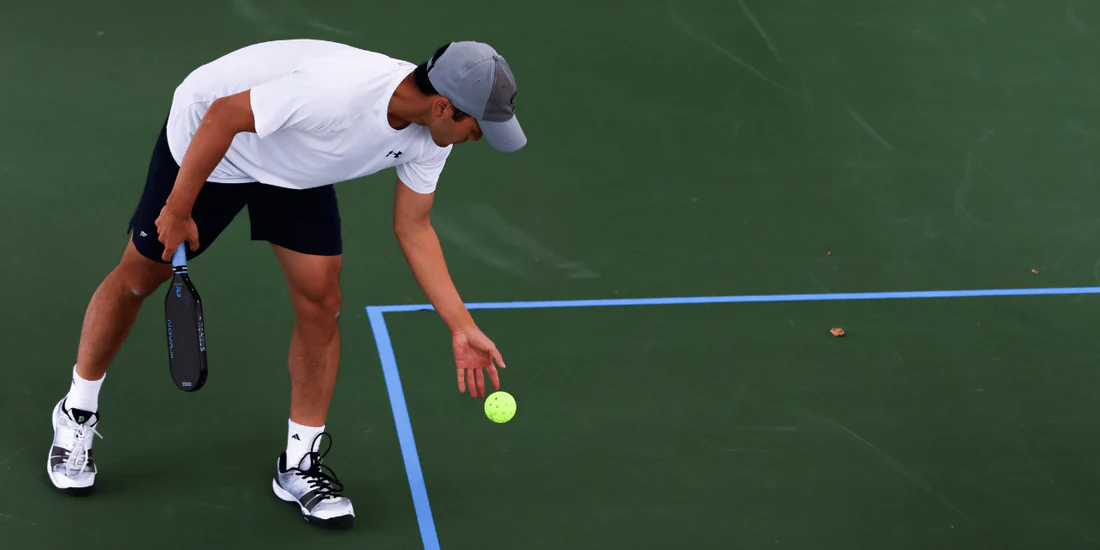
Many of us have heard the all too familiar thud of a plastic pickleball hitting a paddle. Whether you’ve played in PE class, with friends, at the Waterhouse, or watched on TV; pickleball is everywhere.
Played in a 44 by 20 foot court, with a perforated plastic ball and hard paddle, pickleball has expanded into becoming the fastest-growing sport in the United States for the past four years. There were an estimated 19.8 million pickleball players last year, triple what it was just three years ago. Although pickleball seems to be a sport for the elderly, the most popular age of players continues to decrease, with the majority of players being between the ages of 25 and 30.
Pickleball’s success can likely be attributed to its accessibility, easy-to-start nature, and sense of community. There are close to 70,000 pickleball courts within the US, and more to come, so there’s guaranteed to be a court somewhere near you. There are only a few simple rules that you need to understand to play, and pickleball requires minimal movement, especially when playing with a partner. This makes pickleball more accessible than many other sports and leaves room to change the game, so it caters to the players. Pickleball also offers a great opportunity to meet new people with shared interests through playing with partners or against opponents.
Despite pickleball’s formidable emergence in the US, internationally, it’s overshadowed by another miniature tennis game. Padel is played with a smaller, less pressurized tennis ball, called a padel ball, and a thick, perforated paddle. Padel courts are 66 by 33 feet, enclosed within tempered glass and metal-fenced walls. Although padel is often played in pairs, similar to pickleball, it demands more physicality and strategic thinking because of the quick-moving ball, larger court size, and wall play. The escalated strategic aspect mainly comes into play when hitting against walls, as it adds an entirely different dimension to the game and creates many more opportunities to hit shots players might not be able to otherwise.
Padel is most popular in Spain and South America. However, it is rapidly expanding into additional parts of Europe and the United States. Although internationally, there are fewer padel courts, there are around 10,000 more padel players than pickleballers. Many Americans have never heard of padel, despite its global presence, and even top professional soccer and tennis players have been seen playing padel, such as Messi, Ronaldo, Beckham, Nadal, and Djokovic.
Both racket sports are expanding faster than ever before, and although different and targeted towards separate groups, they share many fundamentals. If you’re interested in playing either, there are events nearby at York Paddle & Tennis Club and at the Waterhouse!