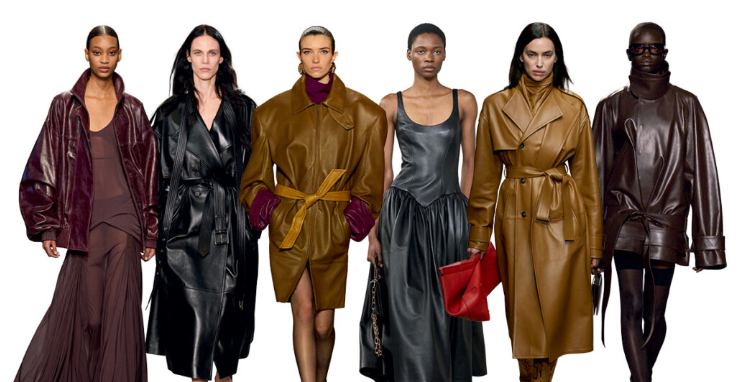
As 2025 draws to a close, fashion is undergoing a noticeable shift in reference to styles, materials, and patterns. Winter trends have shifted away from minimalism towards stronger silhouettes, oversized outerwear, and rich textures. Everyday styles are being shaped by the return of maxi skirts, tall boots, chunky scarves, and velvety coats.
In womenswear, one of the biggest staples of 2025 has been the interplay between femininity, masculinity, and odes to vintage pieces. Silhouettes such as pencil skirts, jumpsuits, sculptural A-line gowns, and slipdresses have all re-emerged this year. At the 2025 Fashion Awards, Cate Blanchett caught eyes in her floor length suit-inspired gown, designed by Givenchy, which merged tailoring and eveningwear. Blanchett’s message was to boldly reclaim the “power suit as glamour” and has been considered “A true fashion muse,” according to Rosa Sanchez, writer for Harper’s BAZAAR. At the same event, Lila Moss wore a layered slip-dress from 16Arlington, paying homage to a new wave of maximalist femininity, complete with lace, feathers, and beaded detailing.
Beneath the surface of these trends, there has been a growing commitment to eco-conscious designs. Many of this year’s tactile fabrics, from faux furs to plant-based leathers, reflect ongoing innovation aimed at reducing the environmental impact of high fashion designs. Several brands and designers are leaning into renewable materials, such as recycled wool blends, bio-fabricated textiles, and all natural dyes. Designer Christian Siriano debuted new pieces in late autumn showcasing a collection made from circ, a recycled fibre made from poly-cotton waste. Karoline Vitto showcased clothing made from seacell, a fiber derived from seaweed blended with wood pulp, to act as an alternative to conventional fabrics. These choices suggest that eco-forward thinking is becoming an industry norm, whilst maintaining a sense of high-quality fashion.
In late November, the 2026 Met Gala theme was announced to be “Costume Art.” Coinciding with the opening of the Met’s new expansive galleries for the Costume Institute, the exhibition aims to explore the “dressed body” across centuries. This theme has underlying anecdotes to global history, pairing garments with paintings, sculptures, and objects from centuries ago. This cultural backdrop feels especially timely, as it gives fashion a place to metaphorically breathe in the timeline of history. Attendees are expected to embrace unique silhouettes, draped fabrics, layered textiles, and mimic works of famous art pieces. This theme encourages not only physical interpretation of both costumes and art, but conceptual interpretation, too. I believe the key to nailing this theme will involve a rethinking of how art and style have evolved over time. One can only hope that when Zendaya sees the theme, she leaves her Cinderella dress at home.
For 2026 fashion as a whole, this merging of art, history, and ecological awareness points toward an evolution of trends of late 2025. The return of structure, dramatic shape, and layered patterns aligns well with the Met’s theme, and suggests that the future of luxury will be defined by ethics in fabric and production as opposed to aesthetics. The resurgence of maxi skirts and flowy fabrics might increase innovations in recycled textiles, whilst giving a high-class feel to everyday outfits. (For outfit inspiration, visit this New York Times article.)
Clothing, in general, is becoming more intentional, as not just something to be worn, but something that sparks larger discussions. As fashion is stepping into the new year, it does so with confidence and artistic motivation.