For over a century, talk shows have been deeply integrated into American television culture. They have long served as platforms for public discourse, particularly in the U.S., where entertainment and politics frequently intersect. Acting as informal public forums, talk shows blend news, opinion, and humor, shaping how American audiences engage with and interpret current events and social issues. However, throughout his second term, President Donald Trump has waged a campaign against the press. Trump lobbed attacks aimed at dismantling the free press, including a $1.1 billion cut in public broadcasting funds to NPR and PBS stations. Most recently, Jimmy Kimmel Live! was suspended following criticisms over Kimmel’s commentary about Donald Trump and his followers’ reaction to the assassination of conservative activist Charlie Kirk.
On May 1, 2025, President Trump issued an executive order to cease funding for National Public Radio (NPR) and the Public Broadcasting Service (PBS) by the Corporation for Public Broadcasting. Trump claims this order is to ensure federal funding doesn’t support biased news coverage. Following accusations of political bias in public broadcasting, NPR CEO Katherine Maher and her PBS counterpart, Paula Kerger, appeared before a House subcommittee on government efficiency. Kerger denounced the executive order as “blatantly unlawful,” emphasizing that it threatened PBS’s ability to serve the American public with educational programming. Both leaders have indicated that their organizations are exploring all options to continue broadcasting while challenging the order.
Democrats criticized the move as an attack on independent journalism, arguing it threatened the ability of public media to share nonpartisan news. In a statement from Texas Representative Jasmine Crockett, she suggested that these cuts reflected a double standard when it comes to free speech, claiming the proposed cuts to public broadcasting were motivated by a desire to silence coverage of the administration’s incompetence rather than any concern over bias. Republicans have largely supported the defunding, viewing it as a longstanding goal to eliminate taxpayer funding towards media that is perceived as biased. Key GOP leaders, including Senate Majority Leader John Thune and House Majority Leader Steve Scalise, pushed the recession package through Congress. Despite some moderate Republican opposition, the bill passed largely along party lines.
Following the funding cuts, CBS announced that it had cancelled The Late Show with Stephen Colbert. Colbert noted that he was not being replaced, as had previously happened when David Letterman left, and Colbert stepped into the role. “This is all just going away,” Colbert said. Despite its high ratings, CBS claimed the cancellation was a result of the show reportedly incurring annual losses exceeding $40 million. However, the timing of the cancellation raised questions, as it followed Colbert’s criticism of CBS’s parent company, Paramount Global, over a controversial settlement of $16 million with President Donald Trump over a 2024 60 Minutes interview with then-Vice President Kamala Harris. Trump alleged that CBS had deceptively edited the interview to favor Harris during the 2024 presidential campaign. Colbert condemned the settlement as a “big fat bribe,” suggesting it was a strategic move to appease the Trump Administration. For this reason, critics questioned whether the cancellation was politically motivated. Colbert’s outspoken criticism and the subsequent cancellation of his show highlighted the tensions between current media organizations and political pressures.
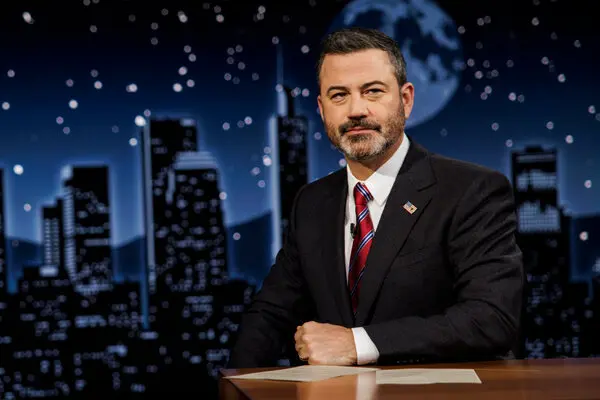
Most recently, on September 17, 2025, ABC suspended Jimmy Kimmel Live! indefinitely, following controversial remarks made by Kimmel regarding the assassination of conservative commentator Charlie Kirk. Kimmel’s comments, which some interpreted as insensitive, sparked backlash from conservative groups and led to pressure from the Federal Communications Commission (FCC) and Republican lawmakers, who warned that ABC’s actions would be scrutinized. The suspension drew widespread criticism from the entertainment industry and free speech advocates, who viewed it as a politically motivated attack on First Amendment rights. After several days of negotiation, Disney announced on the 22nd that Kimmel’s suspension would be lifted. Upon his return, Kimmel addressed the suspension in his monologue, stating, “He tried his best to cancel me,” referring to President Trump.
These recent funding cuts and media suspensions highlight a contentious debate over who truly holds the right to First Amendment protections. When public broadcasters or entertainers express views that conflict with the administration’s priorities, critics argue, their speech is effectively censored. They warn that targeting media for expressing varying viewpoints risks undermining the First Amendment and limiting the diversity of ideas available to the public. Supporters, however, argue that government funds should not support outlets or personalities perceived as biased, and that organizations must be held accountable for spreading content they consider partisan or harmful. They emphasize that freedom of speech does not obligate the government to fund every form of expression. Further, public media, including NPR and PBS, play a critical role in providing accurate news and education programming, ensuring Americans have access to reliable information. Beyond entertainment and education, many of these organizations are vital for disseminating emergency alerts and community updates, particularly in rural or underserved areas. Limiting their funding not only threatens journalistic independence but also jeopardizes the flow of information that keeps the public informed and safe.