On Jan. 20, US Immigration and Customs Enforcement (ICE) launched an enforcement initiative in Maine, dubbed “Operation Catch of the Day,” part of a broader national immigration crackdown. Across cities like Portland and Lewiston, the operation has already resulted in over 100 arrests, and has sparked significant controversy as local officials, immigrant advocates, and community members report that many of the detainees have no criminal records or unlawful work authorization.
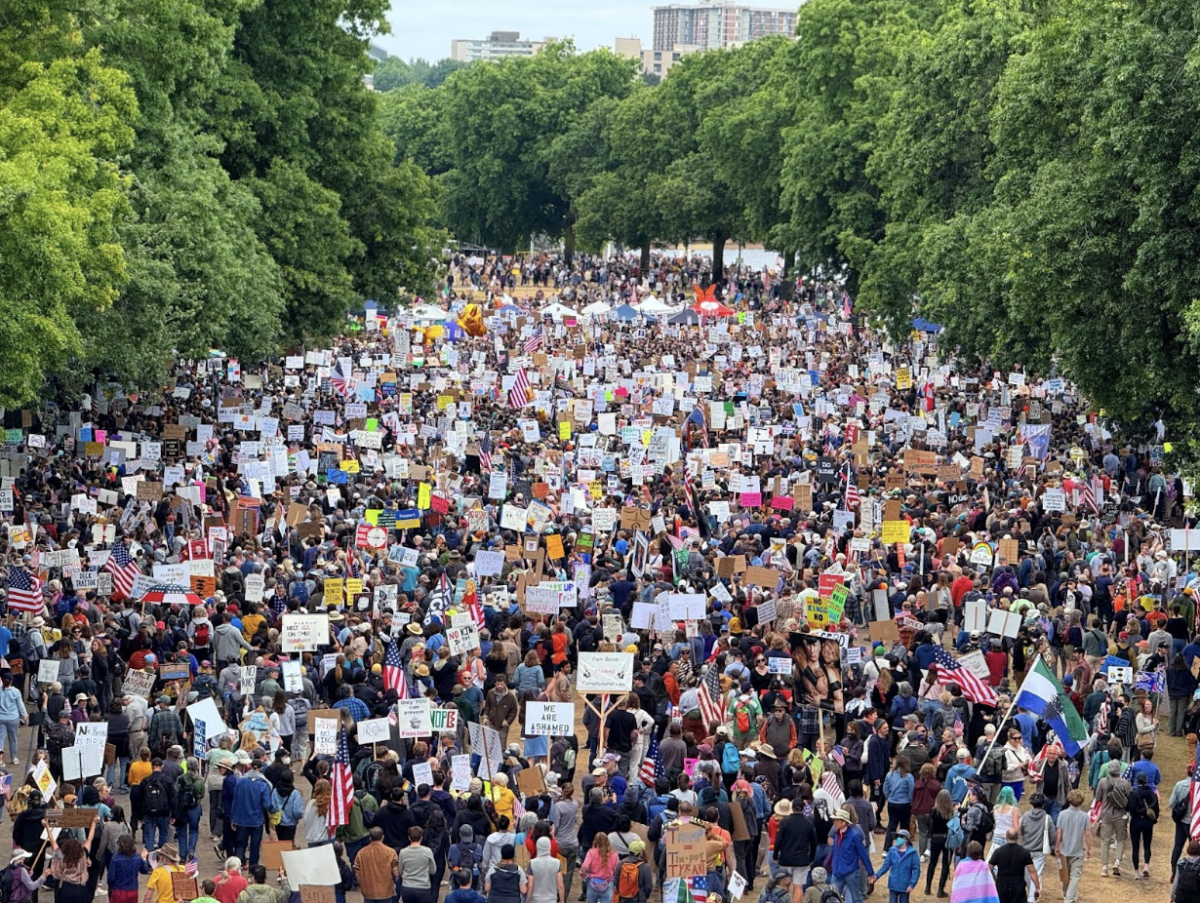
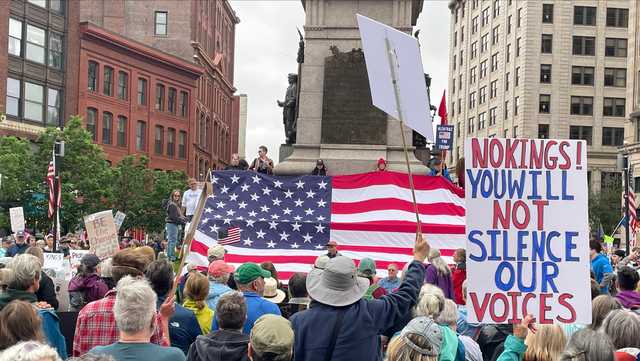
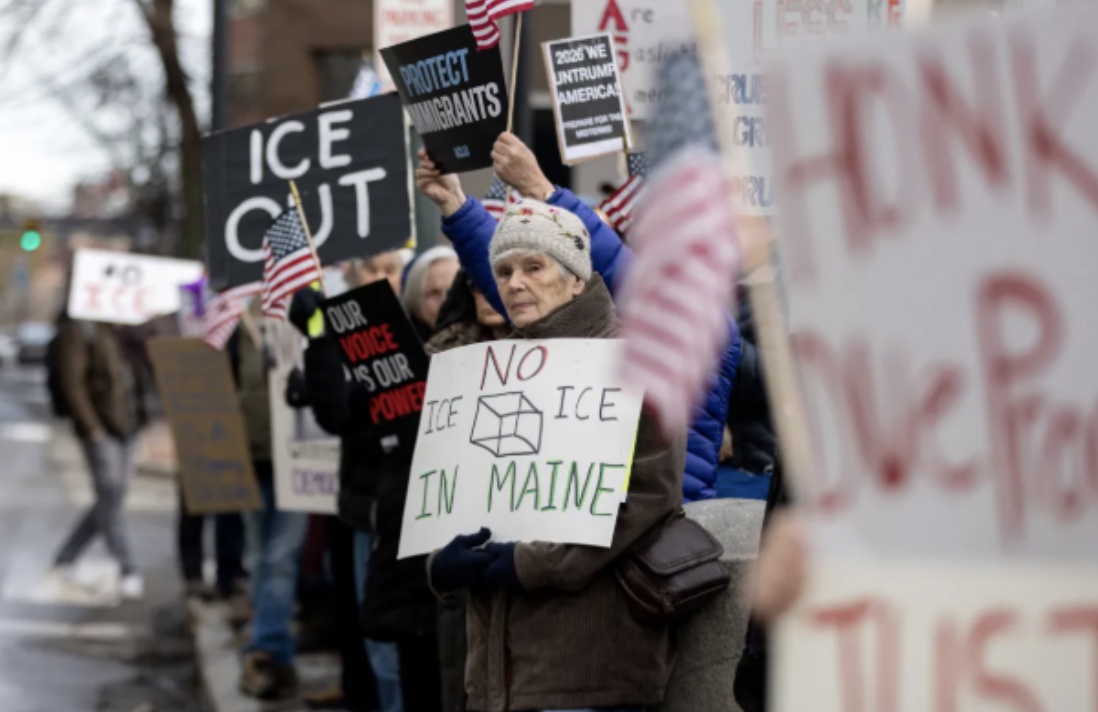
In Maine, thousands of residents have gathered to publicly denounce the aggressive, unconstitutional tactics and a lack of transparency from ICE and the federal government. Politicians like Gov. Janet Mills and U.S Rep. Chellie Pingree have called for greater accountability and restrictions on ICE’s actions. Reporters are working rapidly, but tensions have begun to shape the media landscape in covering these topics. There remains a large sense of fear among journalists that federal enforcement tactics could halt free expression, civic engagement, and basic media reporting.
Across the entire United States, a wave of federal immigration enforcement has roiled communities. This has prompted protests and sparked political debate, challenging journalists to attempt to cover the unfolding story. What began as a federal operation aimed at apprehending undocumented immigrants has grown into one of the most contentious moments in Maine’s history, as well as the nation’s. These raids, which have made national news headlines for months, felt merely conceptual for most- until it arrived in our neighborhoods. ICE agents have conducted raids at local gas stations, schools, and parks. This blend of fear, activism, and questioning about the role of public media all goes beyond the law. It has become sheer inhumanity.
Federal officials characterize ICE’s efforts as “targeting illegal aliens” with convictions for violent crimes, aggravated assaults, and other offenses. At the time of writing this, ICE’s most recent detainee from Minnesota, or so-called “illegal alien” is none other than a five-year old boy named Liam Ramos. A child who entered the United States at a port of entry with his father to secure safety from persecution for their family. Because they came through an official port of entry, the family entered the US completely legally. Photos from the scene show a masked agent standing next to Liam, wearing his school backpack and a blue hat with bunny ears. He had just returned from preschool before being sent with his father to a detention facility in Texas. President Trump and Vice President Vance have recently visited Minnesota, where this arrest took place, and supported ICE for their actions.
Ramos’ lawyer, Marc Prokosch, said in an interview with The Journal, “The family did everything they were supposed to do according to the rules as they exist.” It appears even the law itself is no match for Trump’s self-proclaimed dictatorship, as he mentioned “Sometimes you need a dictator” at the World Economic Forum in Davos, Switzerland.
For some historical context, immigrants have been central to building the United States from the very beginning- not just as laborers, but as farmers, entrepreneurs, and culture-makers. Indigenous people were the original inhabitants of the land, but waves of immigrants (both forced and voluntary) built the physical and economic foundations of this country. Nearly every major industry in the history of the United States- steel, textile mills, fabrics, and advanced technology- has relied heavily on immigrant labor and innovation. Even what we think of as “American food” is largely the result of immigration. Pizza, hamburgers, hot dogs, and bagels are adaptations of foods brought by immigrants and blended with local ingredients.
What is unfolding in Maine and across the nation is not solely an immigration story, but also a test of constitutional values, journalistic freedom, and collective conscience. As enforcement actions move from behind the scenes to the public view, there is a growing responsibility to report both accurately and humanely. Although this becomes more difficult, it becomes more essential. The fear felt by immigrant families echoes among community members who worry that speaking out may carry consequences- but not speaking out merely perpetuates the actions of those who hold power. History will not only judge the policies enacted by the federal government, but also community response. As law enforcement expands and fear spreads, the ability to report freely may be the last safeguard between public power and public silence.